PDF Version
ICDCS-2011 Photos
Supporters


Macau


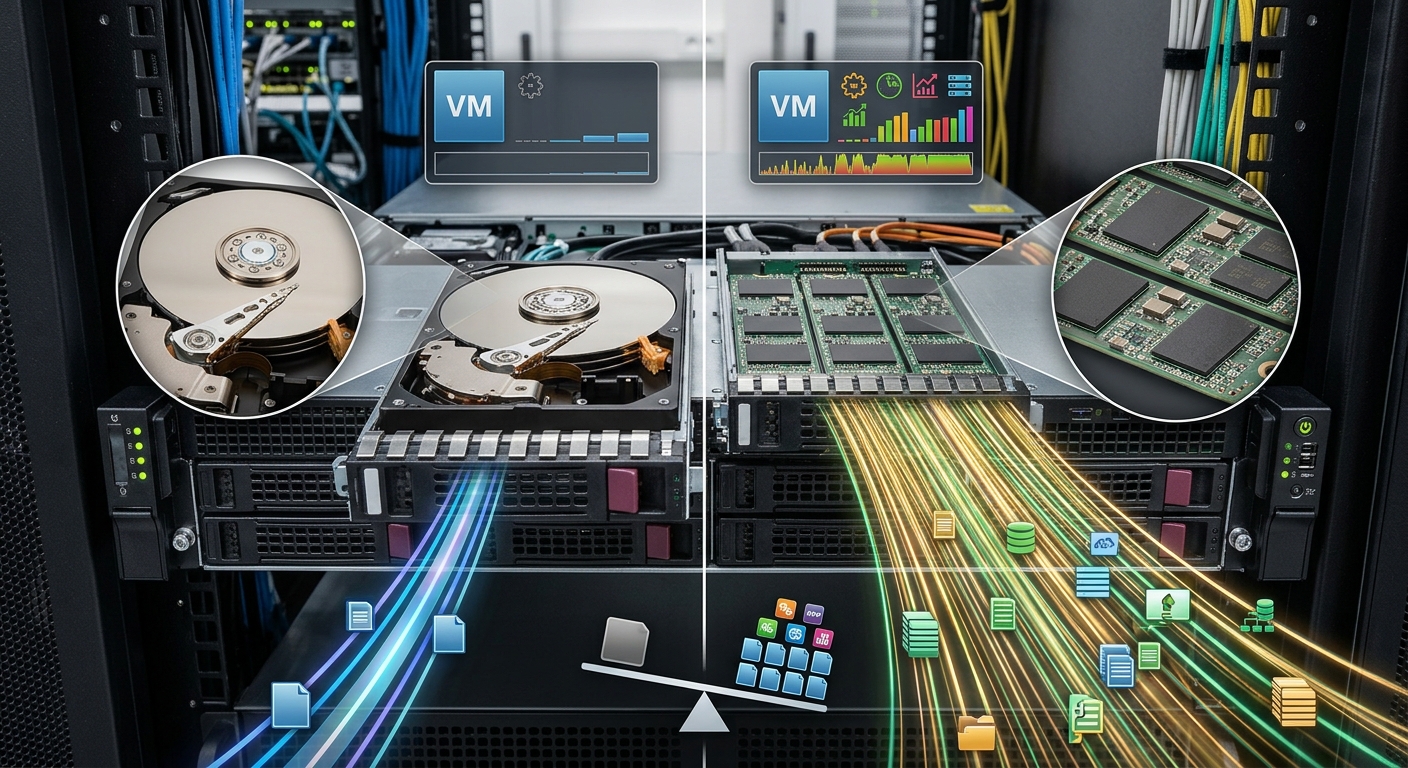
Storage Performance on Virtual Servers: Why NVMe Matters
When a website or database feels slow, attention usually goes to the processor and memory. Often the real bottleneck is storage. Every query, upload and log write passes through the disk, and the difference between storage technologies can be the difference between a page that loads at once and one that makes visitors wait.
What NVMe is
NVMe stands for Non-Volatile Memory Express. It is a protocol for talking to solid-state storage over the PCI Express bus, which is the same fast connection used by graphics cards. Older solid-state drives used SATA, an interface designed for spinning disks, which limits how quickly the drive and the processor can exchange data.
Delta.BG compares the two storage options and explains that its Cloud VPS platform uses all-NVMe storage alongside AMD EPYC processors. Both drives use flash memory, so the difference lies in the connection and the way commands are handled, not in the memory itself.
In plain terms, a SATA SSD is a fast drive on a slower road, and an NVMe drive is the same kind of drive on a motorway. The comparison is a simplification, but it captures why the same flash chips can behave very differently depending on how they are attached.
Read the full comparison at https://delta.bg/en/blog/nvme-vs-ssd-vps-hosting-whats-the-difference-en
Why the protocol makes a difference
The NVM Express consortium explains in its NVMe overview that NVMe is designed from the ground up to work with non-volatile memory, including flash. It notes that typical SAS devices support up to 256 commands and SATA devices up to 32 commands in a single queue, which was adequate for hard disks but cannot take full advantage of flash.
In contrast, NVMe supports 64K commands per queue and up to 64K queues. These queues are designed so that commands and responses operate on the same processor core, and the overview says NVMe needs fewer CPU instructions to process an input or output request, which gives higher operations per CPU cycle and lower latency in the host software stack.
For a busy server this matters because many requests arrive at once. A deep, parallel queue lets the drive work on many of them together, instead of making them wait in a single short line.
There is a second effect. Because NVMe reduces the work the processor spends on storage, more of the processor remains free for the application. On a busy virtual server that headroom can matter as much as the raw speed of the drive, since the same virtual processors handle both the storage requests and the code.
What it changes for real applications
The benefit shows most with many small, random reads and writes. Databases, search indexes, mail servers and content management systems all behave this way, and they spend much of their time waiting for storage. Faster storage shortens queries and reduces the time pages take to build.
It helps less where the bottleneck is elsewhere. A static site served from memory cache, a service limited by the network or an application that burns processor time will not speed up much. Storage cannot compensate for too little memory, since even fast flash is far slower than RAM.
Sensible tuning therefore starts with measurement. Find out whether the application waits on disk before paying for faster storage, and give the database enough memory to cache hot data. Indexes, query design and caching often deliver bigger gains than any hardware change, and they cost nothing, so review them before spending. Measure first. Small wins add up.
Measuring storage on your own server
You can check what you have. On Linux, the device name often reveals the type, and names that begin with nvme indicate NVMe storage. Tools such as iostat show how busy the disk is and how long requests wait, and benchmarking tools such as fio can measure throughput and latency under controlled conditions.
Look at latency, not only speed. Throughput figures in megabytes per second matter for large files, but for databases the time for a small random read, and how it behaves under load, tells you more. Compare typical and worst-case times, since spikes spoil the experience.
Run tests on a quiet system and repeat them. Shared platforms can vary through the day, and a single run may mislead. Record the results, so that you can compare after any change. A short script that repeats the same test is better than a one-off command. Save the output files. Dates help too.
Choosing and budgeting
NVMe is not always necessary. A small brochure site or a low-traffic blog may run happily on a slower disk, and the savings may be real. For databases, e-commerce stores, busy forums and applications with many users, NVMe is a sound default that removes a common bottleneck.
Look at how a provider uses it. Delta's documentation says NVMe drives provide significantly faster data access than traditional SSD and HDD drives, and that extra block storage volumes can be attached to a server. That allows a small fast system disk with larger volumes for data that grows.
Finally, protect the data. Fast storage does not replace backups. Take snapshots before changes, keep copies off the server and test restores. Speed is useful only when the data is safe. Check that the provider's snapshots and backups are included in the price and that you know how long a restore takes. Test it once.